Getting around the South Bay often means getting in the car, whether you’re commuting, meeting friends or heading to the airport. Metro’s K Line Extension to Torrance project could give residents another option while bringing more of the South Bay into the region’s rail network.
For South Bay residents, homebuyers and sellers, it’s a local development worth following as plans take shape. The project has reached a major approval milestone, but there is still substantial work ahead. Here’s a look at what’s planned, how it could benefit the community and the potential tradeoffs worth considering.
What is the K Line Extension to Torrance?
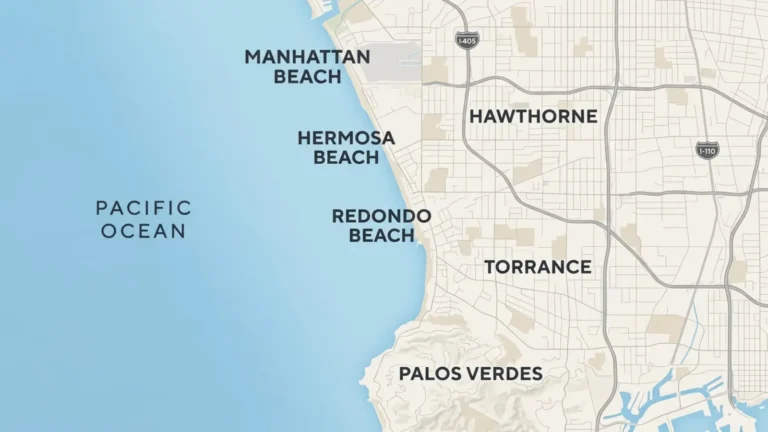
The K Line Extension to Torrance would add approximately 4.5 miles of light rail from the existing Redondo Beach (Marine) Station to the Mary K. Giordano Transit Center in Torrance. Plans include two new stations serving the South Bay Galleria and Torrance Transit Center.
In January 2026, Metro’s Board approved the K Line Extension to Torrance and selected the Hawthorne Option. This route follows portions of the I-405 corridor, the center of Hawthorne Boulevard and Metro-owned railroad right-of-way.
If you remember hearing about the “Green Line Extension” or “C Line Extension,” this is the project now called the K Line Extension to Torrance.
How could it benefit local residents?
The biggest potential benefit of the K Line Extension to Torrance is having more choices. Rail won’t replace every car trip, but it could become a useful alternative for certain destinations and routines.
More connections beyond the South Bay. Metro says the extension would improve access to Inglewood, LAX connections and the wider rail network, including the C and E lines. For residents whose destinations line up with those routes, that could mean fewer trips behind the wheel.
More flexibility for households. A useful transit connection could make it easier for family members to travel independently or reduce the need to coordinate every outing around a shared car. The benefit would depend on how easily someone can reach a station and where they need to go.
Another way to reach local destinations. Stations serving the Galleria and Torrance Transit Center could make rail part of trips for shopping, work or connecting bus service. Someone might use it occasionally rather than daily and still find it worthwhile.
An alternative to traffic and parking. For some trips, leaving the car behind could reduce the frustration of freeway congestion or finding parking. Whether rail saves time would depend on the complete journey, including station access, waiting and transfers.
What are the potential drawbacks?
A project of this scale also raises practical questions for the neighborhoods and businesses along its route.
Construction disruption. As construction plans develop, residents will want to understand possible noise, lane closures, detours and changes to access. The effects could differ considerably from one stretch of the route to another.
Changes near the rail corridor. Nearby residents may have questions about train noise, the appearance of rail structures and how station activity could affect surrounding streets. Those concerns deserve attention as detailed designs become available.
Getting to the station. A station can be relatively close on a map without being easy to reach on foot. Sidewalks, crossings, bike access and connecting buses will help determine how useful the extension actually feels.
The rider experience. Service frequency, cleanliness, safety and reliable connections will also matter. New track alone won’t determine whether residents choose transit regularly.
These are questions to follow through the design process, rather than assumptions that every neighborhood will experience the same benefits or impacts.
When could it open?
As of October 8, 2026, Metro lists the K Line Extension to Torrance in the design phase, with estimated completion in late 2036, pending funding availability. Engineering, agency coordination and securing additional construction funding remain part of the work ahead.
The timeline gives residents a sense of the project’s horizon, while leaving room for changes as funding and design decisions progress.
Why it’s worth following
For Torrance and neighboring South Bay communities, the extension could broaden how residents get around and connect with the rest of Los Angeles. Its value will come down to practical details: convenient station access, useful service and how well the project fits into the surrounding neighborhoods.
From a local real estate perspective, it’s a community development worth understanding. The more useful conversation is about how it could change everyday life, rather than predicting a particular increase in home values. If you are weighing a move, browse homes for sale in Torrance and compare each address’s current commute with the planned stations.
To explore the route, follow design updates or sign up for notices, visit Metro’s K Line Extension to Torrance project page.
Project information checked October 8, 2026. Plans and timing may change.